
At some point the hot tub stops being a hot tub and starts being a giant planter full of leaves and frog water. Maybe the heater died. Maybe the last time anybody sat in it was three owners ago. Either way it's just sitting on the lanai now, taking up space and judging you a little. Getting rid of it is more work than people expect, so here's how it actually goes.
How heavy is a hot tub, actually?
A hot tub looks like a big plastic shell. What it actually is, once you start moving it, is a slab of foam insulation, a wood or composite frame, a pump, plumbing, and a fiberglass body that soaked up water for years. Even bone dry, a mid-size tub can run a few hundred pounds. A bigger one with the cabinet still on it is a heavyweight, and it's wide and clumsy on top of being heavy. Two people and a bad plan is how somebody throws their back out.
Do you have to drain it first?
Before anything moves, the water has to go. Most tubs have a drain valve at the bottom, and a garden hose helps you run it out to the yard or a drain instead of flooding the lanai. If the pump still works, that speeds things up. If it doesn't, gravity and patience get it done. A wet tub is not only heavier, it sloshes, and sloshing while you carry something is how it goes sideways on you. Give it time to drain all the way down.
Should you cut it up or move it in one piece?
Once it's empty, there are two roads. If there's a clear path to the driveway and enough hands, the tub can sometimes come out in one piece. More often, especially with a tight lanai or a screen enclosure in the way, it's easier to cut it apart. A reciprocating saw turns the shell into manageable chunks, and the cabinet comes off in panels. Cut pieces load into a dumpster a lot easier than fighting an intact tub through a doorway. Either way, the cover usually goes too, and those waterlogged covers are deceptively heavy on their own.
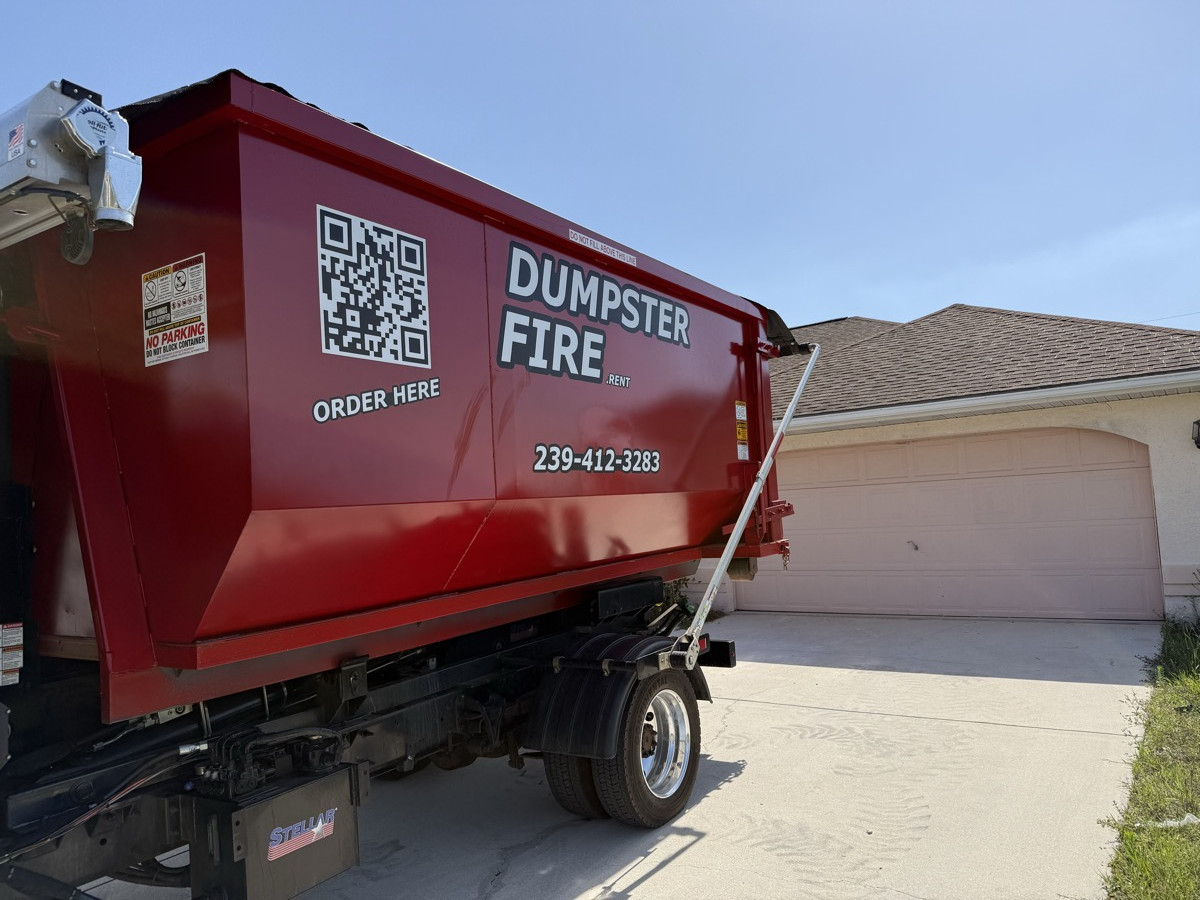
On cost, the 15-yard is $349.99 with 3,000 pounds, three days, and driveway protection, which covers a tub plus a load of yard junk with room to spare. The 7-yard at $324.99 and 2,000 pounds can work for a small tub cut down tight, but the price gap is small enough that most people take the bigger box and use the space. Extra days are $25.
Two things get left behind that people forget to plan for. The first is whatever the tub was sitting on, usually a concrete pad, a paver base, or a section of deck. If that's coming out too, it's heavy, and it changes the size conversation, so mention it. The second is the electrical. A tub is wired to a dedicated breaker, and that connection should be dealt with by an electrician before the tub moves, not after. We're not going to touch the panel, and you don't want a live line sitting in a lanai with an empty spot where the tub used to be.
Dumpster or full haul?
If you've got the tools, the help, and a free Saturday, a roll-off dumpster in the driveway is a solid way to do this. Cut the tub down, load it, and toss in whatever else you've been meaning to clear out while you're at it. For a hot tub plus some yard junk, the 15 yard usually fits the bill.
If cutting up a fiberglass shell in the Florida heat is not your idea of a good time, that's what we're for. Our junk removal and cleanouts crew handles the draining, the cutting, the lifting, and the haul. You point at the tub, we make it disappear. We work all over our service area, from Port Charlotte down through Lee County.
One local wrinkle: a lot of tubs down here sit inside a screened lanai or a pool cage, which is the part that decides the job. The opening in a screen enclosure is usually narrower than the tub, and cutting the screen or a panel out to get it through is a repair you then own. That's the main reason we cut tubs down in place rather than trying to walk them out. If yours is inside a cage, send a photo of the enclosure along with the tub so we can see the path out.
Either road, the tub doesn't get to win. Call or text (239) 412-3283, send a photo of the thing, and we'll tell you what it'll take to get it off your lanai.