
Every back yard has one eventually. The shed that used to be square and is now leaning a little to the left, with a door that doesn't latch and a roof that's seen one too many summers. You keep meaning to deal with it. Then a storm rocks it a bit more and you start wondering if it'll come down on its own first. Here's how to take it down on purpose instead.
What do you do before you start tearing?
Sheds are where stuff goes to be forgotten. Before any tearing happens, get everything out. You'll find the rake you bought twice, half a bag of concrete that's now a solid brick, and at least one wasp situation you'll want to handle carefully. Pull it all out and sort as you go, because the inside of an old shed is usually its own little cleanout. Bagged junk, broken tools, paint cans, the works. Watch for critters too. Florida sheds tend to come with tenants you didn't invite. A black snake or a wasp nest is a lot easier to deal with before you start swinging a pry bar than after.
Watch what you pull out, too, because sheds are where the things that can't go in a dumpster end up. Half-used cans of oil-based paint, old gas for the mower, a propane cylinder for the grill, a car battery on the shelf. None of those can go out in the box, and they have to reach a hazardous waste site instead. Dried latex paint is fine. Set the rest aside in one spot before you start swinging and it stays a five-minute problem rather than something we find at the bottom of a full load.
What's worth saving off an old shed?
Not everything in or on the shed is trash. Decent shelving, hand tools, a working mower, anything still useful is worth setting aside. The shed itself is usually a different story. If the wood's gone soft, the roof leaks, and the frame's racked over to one side, it's past saving and you're better off starting fresh. Metal sheds sometimes have salvageable panels, but rusted-through walls aren't doing anybody favors. Be strict about what's actually usable versus what you're keeping out of guilt.
What size dumpster does a shed take?
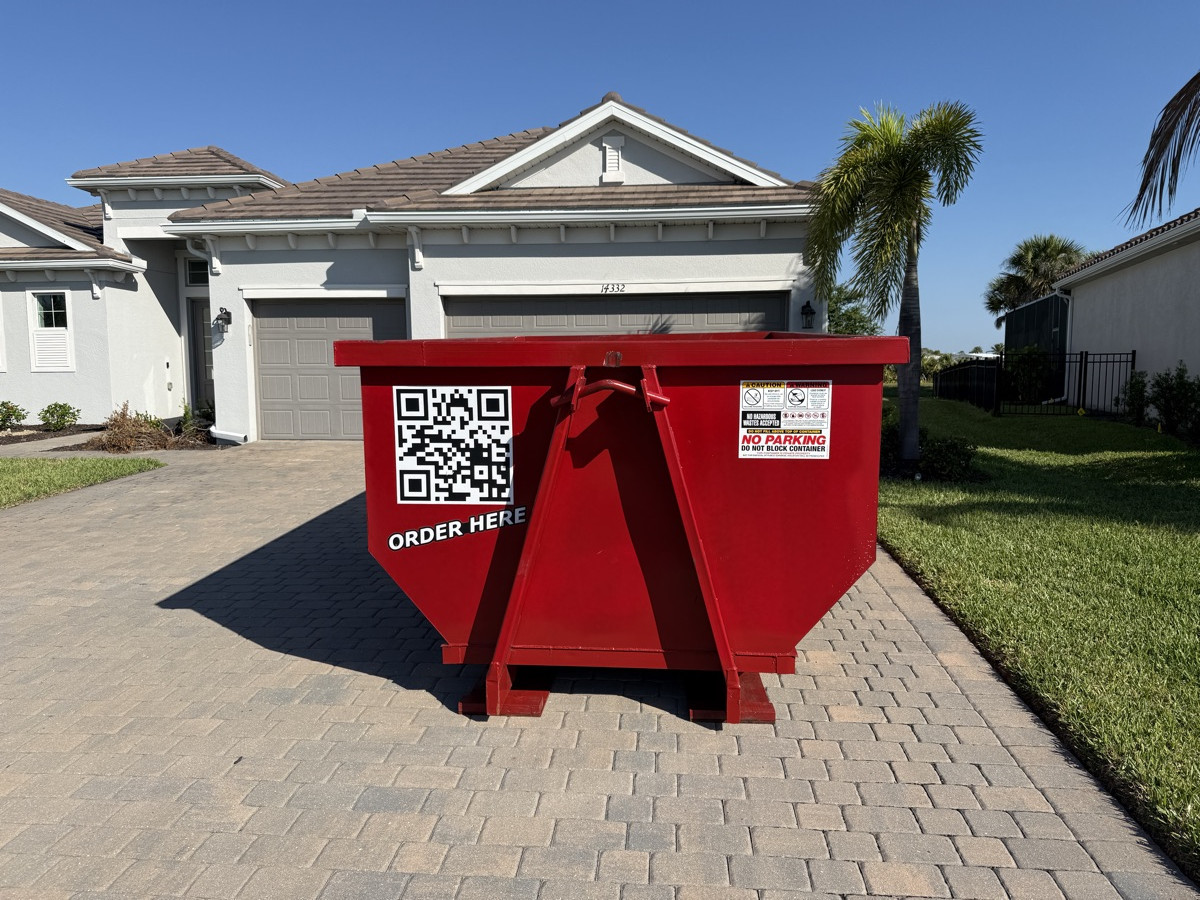
A wood shed comes apart roughly in reverse of how it went up. Roof first, then walls, then the frame, then whatever floor or base it sat on. A pry bar and a reciprocating saw do most of the work, and a partner to hold the other end keeps the panels from falling on anybody. Take the roof off before the walls and the entire thing gets a lot more stable to work on. The pile adds up fast once it's all flat, between the lumber, the roofing, and the old shingles. A roll-off dumpster right there in the driveway saves you a lot of trips to the dump. For most single sheds the 15 yard handles it, though a big one with a concrete pad in play might want the 20. If you're not sure, send a photo and we'll point you at the right size.
The numbers: the 15-yard is $349.99 with 3,000 pounds and three days, and the 20-yard is $424.99 with 4,000. Extra days are $25 and overage is $100 a ton at the exact weight. Where sheds catch people is the base. Lumber and roofing are bulky and light, but if the shed sat on a poured pad and that pad is coming out too, the concrete alone can eat the allowance. Mention the pad when you call so we size for it.
If you'd rather not spend a weekend prying apart rotten wood in the heat, that's what we do. Our shed and deck removal crew does the tear-down and the haul, and we'll clear out the inside while we're at it. One thing to be clear on: we handle removal of sheds and similar structures, not permitted structural demolition. If your project needs a permit and an engineer, that's a different kind of job than what we do.
Storm season is when most of these finally come down. A shed that has been leaning for two years tends to lose the argument with the first big blow of the summer, and then it's not a project you scheduled, it's debris in the yard. If yours is already half down, we can take it as-is. There's nothing to plan around at that point.
We work around Port Charlotte and across Charlotte and Lee County. Maybe you want a dumpster to do it yourself, or maybe you want the leaning mess gone without lifting a board. Either way, call or text (239) 412-3283 and we'll tell you what it takes.